Nashville, Tennessee
How Far In You Get
An independent paper published in Nashville about half public ground: the quadrangles, gardens, lanes and reading rooms that belong to somebody else and let a visitor in anyway. Eight pieces, sorted by permission rather than by place.
Why the paper sorts this way
Guides to a city sort by neighborhood, or by price, or by what they think you are interested in. All three assume the hard question is where to go.
In this city it is not. The hard question is whether you are allowed to be there, and almost nothing answers it. The gate is open and there is no sign. The website has last year's hours. The place looks like a park and is a working cemetery. A visitor stands at the entrance doing arithmetic and then walks past.
So the paper sorts by the only thing that actually decides a visit: how far in you get, and on whose terms.
- Ground with nobody to askNo gate, no hours, nobody whose day you interrupt by being there. The commonest kind of half public ground in this city and the kind visitors trust least, because nothing tells them it is allowed.
- Ground that keeps hoursOpen, and open on somebody else's clock. The hours are the whole of the arrangement, and they are the thing most often out of date on the internet and correct on the gate.
- Ground that opens if you askA name in a book, a telephone call the week before, a person who says yes. Asking is not a formality here: it is the entire difference between welcome and trespass.
- Ground where the edge is all of itThe fence, the lane, the last public foot before the working part starts. Reading the edge as a refusal is a mistake; the edge is often the best seat in the place.
Look up a fare
How the search on this page pays for the paper. The search itself is run by an outside booking service, not by us. Any booking and any payment happens over there, under that company's terms, and we are not a party to it. If a booking follows a search started here, this paper may be paid a commission for it. That commission comes out of the service's side and the fare a reader is quoted is the same either way.
The search opens on our own subdomain. We publish no fares of our own anywhere on this site and we quote no prices, because the numbers belong to the service running the search and change without telling us.
The eight
- Ground with nobody to askA Greenway Under a Viaduct | DoorstoneA strip of public paving that goes under something enormous, and is quieter for it. No gate, no hours, and almost nobody there at two in the afternoon.
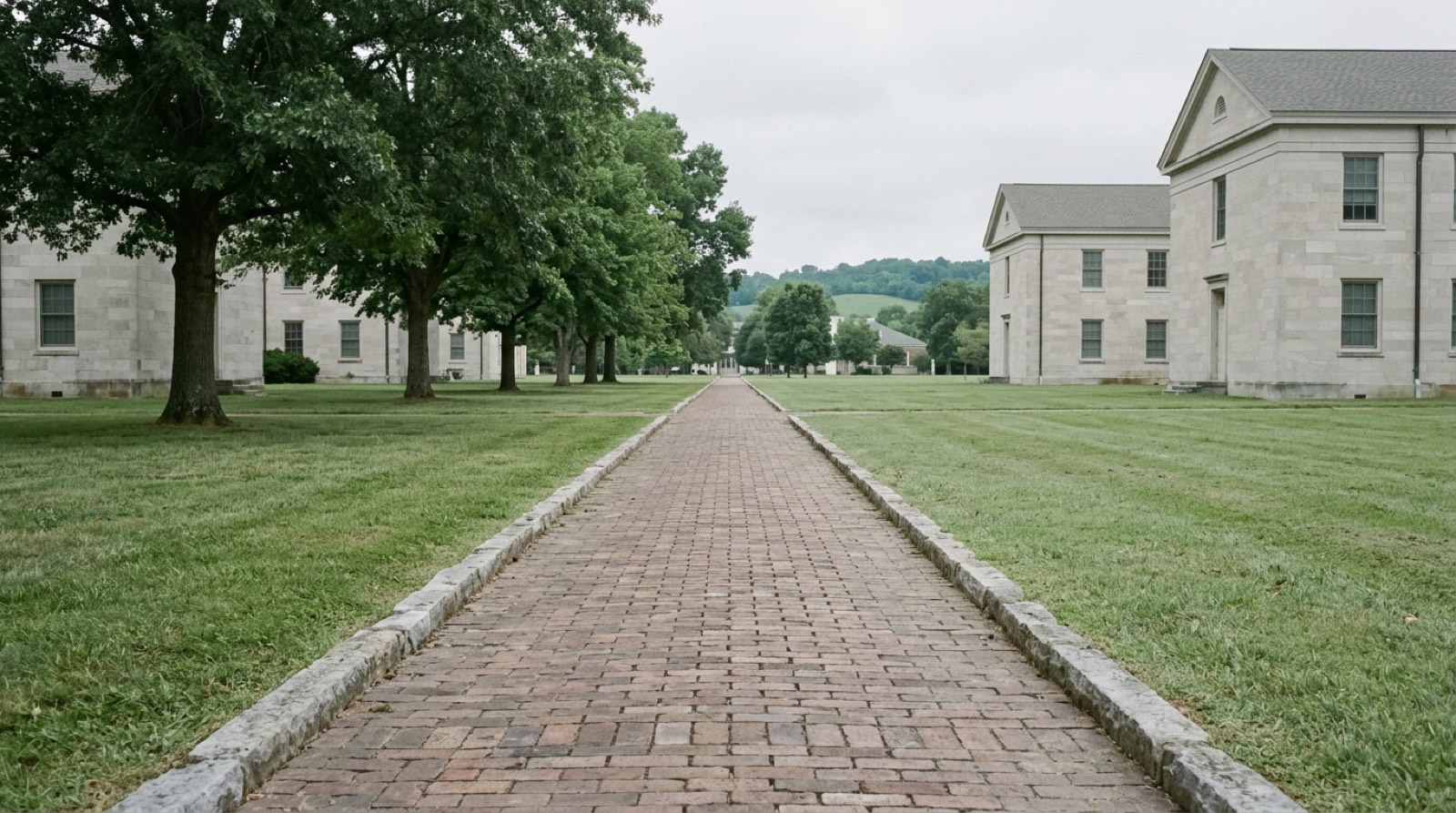
- Ground with nobody to askA Quadrangle You Can Walk Through | DoorstoneThe commonest piece of half public ground in this city, and the one visitors stand at the edge of and then go around.
- Ground that keeps hoursA Cemetery That Locks at Dusk | DoorstoneThe only place in this book whose closing time is a condition rather than a number, which makes it the most misread gate in the city.
- Ground that keeps hoursAn Arboretum That Opens at Eight | DoorstoneOpen every day, on somebody's clock, and the clock is the entire arrangement. Turn up ten minutes early and you are standing outside a locked gate with a very good view through it.
- Ground that opens if you askA Reading Room That Wants Your Name | DoorstoneOpen to anybody, and open only after you have written your name in a book and put your bag in a locker. Two minutes of friction that keeps most people out of the best room in the city.
- Ground that opens if you askA Rooftop You Have to Telephone For | DoorstoneNo hours, no gate, no sign. One telephone number and a person on the end of it who says yes on some days and no on others, for reasons that are entirely theirs.
- Ground where the edge is all of itA Fairground Between Events | DoorstoneAn enormous piece of ground that is either wide open or entirely shut, with almost nothing in between, and the calendar is the only thing that decides which.
- Ground where the edge is all of itA Working Farm You See From the Lane | DoorstoneA genuine working farm inside the county line, with a public lane down one flank and a gate that does not open for visitors. The lane is the whole offer, and it is a better one than it sounds.
What we do before we write anything
- Go, on an ordinary day, at the hour we are going to recommend, and go back at a different hour.
- Telephone the number painted on the board, because the board is right and everything published elsewhere is a copy of it made at some point in the past.
- Stop where we are told to stop, and say on the page exactly where that was.
- Name no business. Every piece here is about a kind of ground rather than a company, which is why you will not find a single trading name in this paper.
What is not here
No prices. We publish no figures of our own anywhere on this site. The only numbers a reader meets come back from the fare search above, and they belong to the service running it.
No reviews and no ratings. Nobody has sent us one, so there is no block for them. An invented one would be worth less than the space.
No sponsored pieces. Nothing in the eight was paid for, suggested or seen in advance by anybody who owns the ground it describes.
How the paper is paid for
The fare search above is run by an outside booking service. Any booking and payment happens over there under that company's terms, and if a booking follows a search started here this paper may be paid a commission. The fare a reader is quoted is the same either way.
That, and the company behind the paper, is the whole of the funding. There is no membership, no subscription and no advertising sold on these pages. The paper sets out the arrangement at length, and the fare search sets out what the search itself does.
Reading it
Four bands, two pieces in each, and every piece answers the same four questions in the same order: whose ground it is, how far in you get, what it costs to be there, and what going wrong looks like.
Start with how to tell if you are allowed if the whole idea is new, or with the difference between private and closed if you have ever turned back at an open gate.