Ask first
A Reading Room That Wants Your Name
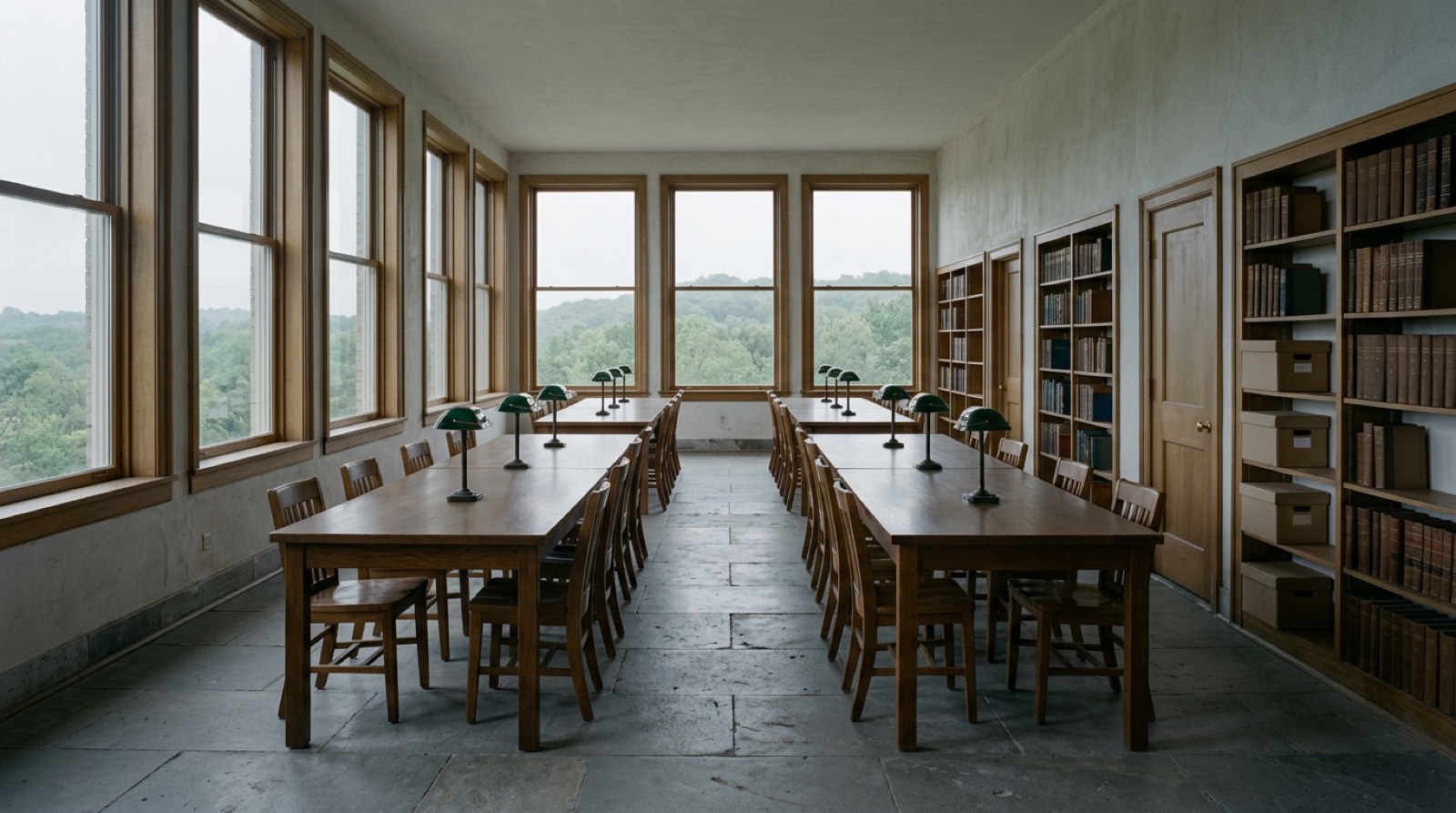
Open to anybody, and open only after you have written your name in a book and put your bag in a locker. Two minutes of friction that keeps most people out of the best room in the city.
The four questions
| Whose ground it is | An institution that owns the collection and answers to a board for its condition, which is the reason for every rule in the room. |
|---|---|
| How far in you get | The whole reading room and the open shelves, during staffed hours, after signing in. Not the closed stacks, which come to you rather than the other way round. |
| What it costs to be there | Nothing in money. A name, an address, sight of something with your name on it, and your bag in a locker. |
| What going wrong looks like | Turning up in the last half hour and expecting to be given anything. Retrieval takes time and the desk stops requesting before it stops reading. |
What the book is for
Not surveillance, and not gatekeeping. It is for the collection.
Items in a room like this are irreplaceable in the plain sense: there is one, and if it is damaged there is none. The register exists so that a page found torn in March can be traced to the four people who had that box in February. That is the whole purpose and it is a good one.
Once you understand that the ask is about the objects and not about you, the friction stops feeling like suspicion and starts feeling like housekeeping.
The two minutes
- A name and a contact. Written, not typed, in most rooms of this kind.
- Something with your name on it. Anything ordinary. Nobody is running a check.
- Your bag in a locker. Coats too. What comes to the table is paper, a pencil and a telephone on silent.
- Pencil only. They will lend you one. This is the rule people argue about and it is the one rule that is never bent.
Photography for your own use is usually allowed and flash never is. Ask at the desk rather than assuming, because the answer varies by item rather than by room.
What asking actually gets you
Far more than access. It gets you the person at the desk.
The single most useful thing in a room like this is not the catalog, it is the fact that somebody there has spent nine years with this material and can tell you in forty seconds that what you are looking for is in a different box under a name you would never have guessed.
Visitors treat the desk as an obstacle to get past and then work alone for three hours. That is backwards. Describe what you are actually trying to find out, not what you think you want to see.
Timing
Retrieval from a closed store runs on a schedule, often two or three pulls a day, and the last one is well before closing. A request made at four in the afternoon may be a thing you come back for tomorrow.
Which means the reading room's real hours are shorter than its posted hours, and the difference is not written anywhere. Ask on the telephone before you plan a day around it.
Practical
- Lockers take a coin or a token and give it back.
- Pencils, paper and a copy stand are provided. Nothing else is.
- Water is outside the room and there is nowhere in the room to put it.
- The quietest hours are the first ninety minutes.